Sunday, April 21, 2013

Book Review: Korea, The Impossible Country

With 8 months under my belt here in South Korea and some sense for how things work in these parts, I'm continually surprised by how little knowledge of Korean culture or language a foreign face needs to show to impress many of the locals.  Just by saying a couple phrases of broken Korean that I have learned or knowing the names of the past couple presidents and I have somehow been able to wow people.  Just the other day, I surprised one of my Korean colleagues on my new team at work with my chopstick abilities in the Samsung cafeteria.  I understand that some foreign tourists might visit without knowing how to use chopsticks but I don't see how a foreign expat living here could possibly get by without this essential skill.  I would starve.

My foreign face made an impression on this Korean ajumma (who insisted on taking a photo with me).  In Daegu.

I've tried to be a student of the history and culture during my time here.  Indeed, I would feel even more out of place than I already am if I didn't have some sense for what was going on around me and why.  I try to keep my eyes open and observe as best I can, watch a little Korean TV every now and then (even when I can't understand what they are saying), and read bits of English-language Korean news.  Also, because the history of the country strongly dictates the culture, I've tried reading some books to improve my understand of what underlies the Korean psyche.  Korea Unmasked, by Rhie Won-bok, was a good start to learning about the differences between Korea, China, and Japan.  Ask a Korean Dude, by Kim Hyung-geun, is a quick and irreverent read detailing some of the quirks of Korean culture.  Recently I read Korea: The Impossible Country, by Daniel Tudor.  When he is not writing books, Tudor is Korea Correspondent for one of my favorite periodicals, The Economist. 

I very much liked Tudor's book because it tells the story of modern Korea from a Westerner's perspective.  It shows the strains and contradictions that have woven themselves into Korean society to create the country that exists today.  Since Korea is so poorly known to the Western world, Tudor's book fills an important need to better explain what modern South Korea represents to foreigners.  Tudor not only describes the ancient influences that remain very strong here, such as Confucianism, but also the influences on Korean music, business, politics, education, and other topics relevant for a full understanding of Korean life.

Tudor asserts his view of modern Korea in his book's title.  Korea's near-impossible ascendency from an impoverished backwater to a wealthy technological leader deserves to be studied, Tudor asserts.  But the book's title has a double-meaning.  Despite having pulled their country up by its bootstraps, Koreans remain the country with the longest working hours in the world, and children endure grueling amounts of education to compete fiercely for the few spots at top universities and Korea's all-powerful chaebol business conglomerates.  South Korea puts too much pressure on its citizens to conform to impossible standards of education, reputation, physical appearance, and career progress.  South Korea is now second to only Lithuania worldwide in terms of suicides per capita.  Tudor wonders when Koreans will uncork the champagne and relax a little.

I highly recommend Tudor's book to anyone embarking on an extended stay in South Korea.  Korea: The Impossible Country describes many elements of life here that foreigners should understand.  Why the Korean society is so sexist, for instance, and what women are doing to break through centuries-old barriers.  The source of Korean nationalism and its "bunker mentality" that resists foreign influence.  Why saccharine, similar-sounding K-pop sounds prevail on the radio.  What motivates some Koreans to spend a third of their after-tax income on private English education for their children.  I wish my blog can provide an understanding of some of these elements of life in Korea, but Tudor's work is far more thorough and intellectually nourishing than whatever I will be able to accomplish online.

Koreans invest a lot into learning English, but much of it I still don't understand.  Why so serious?

Saturday, March 30, 2013

What is the Deal with North Korea???


Fear me???
 
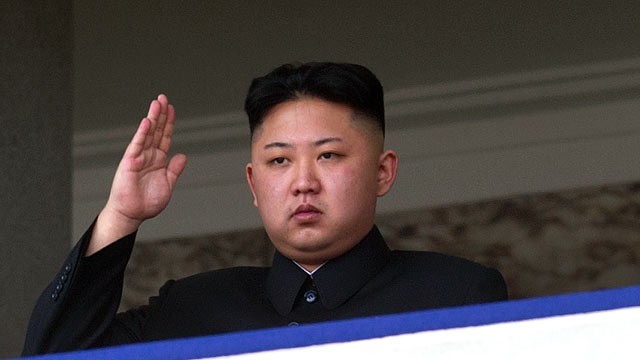
Time to dwell briefly on one of my least favorite, most annoying topics: North Korea.  I really, really did not want to devote blog space to this ridiculous subject, but after receiving so many messages from people abroad asking about the situation, I feel no choice but to talk about it here.  Damn you, Kim Jong Un!

Given Western (and by Western I mean mostly American as that is where I am from) media coverage of the unfolding buildup of hostilities on the Korean peninsula, though, I’m not surprised at the level of concern expressed by my overseas friends.  It does sound grave.  The North has promised to turn South Korea into a “sea of fire”.  They have conducted a nuclear test, launched long-range rockets, cut off an emergency military hotline with the South, and “withdrew” from the 1953 armistice agreement ending the Korean War (though they did this before just 4 years ago).  Their spokesmen have vowed to “break the waists of the crazy enemies, totally cut their windpipes and thus clearly show them what real war is like.”  So yeah, if we take the North at their word, we should be extremely concerned!!

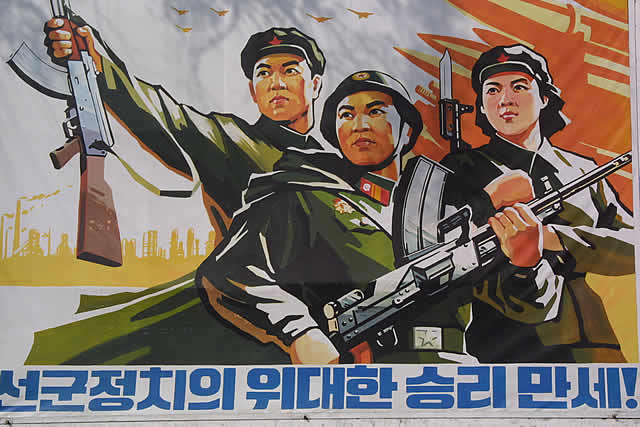
But talk does not equal action, especially from a dystopian state reminiscent of Oceania from the book “1984”.  As anyone who has read George Orwell’s classic remembers, the fictional state from the novel is in a perpetual state of war with either Eurasia or Eastasia, though the narrator can never remember who.  The ruling party of Oceania claims that perpetual poverty is a necessary sacrifice for the war effort.  People convicted of “thought crimes” against the state are sent to reeducation centers and tortured until they can again prove their loyalty to the totalitarian state.  And so we also these elements in contemporary North Korea, a state where the citizens live in relentless fear or have been mindlessly brainwashed into believing that the country must unite and sacrifice to fend off the ever-present “American imperialists”.

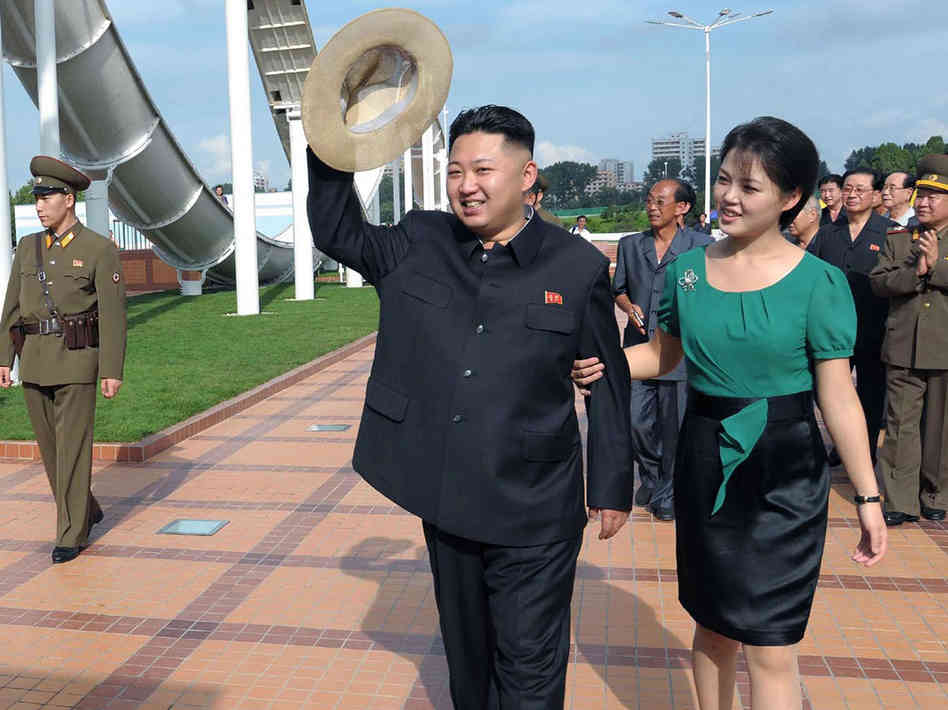
What we know about the new Dear Leader: he likes the Chicago Bulls, wears cowboy hats, and has a pretty Korean wife

Frankly, I see the North Korean government as noisy neighbors.  I think Kim Jong Un and his military advisors are simply playing power politics, doing whatever it takes to maintain control over their wretched and miserable populace and retain a life of luxury.  So they keep their country in a perpetual state of crisis to inspire nationalism amongst the people.  They threaten attacks on their southern neighbor and the US as a way to extort donations and try to earn a place at international negotiating tables that they don’t deserve.  They get upset about external affairs – things like UN sanctions or American war games – and turn up the rhetoric to try to get some control over them.

There’s a cultural element missed by Western news agencies that publish every word issued by the North Korean regime: Koreans have a flair for dramatic, over-the-top, oftentimes ridiculous and unsubstantiated rhetoric.  I see this too in South Korea.  Many of the videos shown internally over Samsung internal television also use language that Westerners find theatrical and absurd.  South Korea has an extreme culture in so many ways – in the amount people work, the amount they drink, the amount of plastic surgery they get – so I am not surprised when this extreme element of the Korean character gets translated into language.  North Korea and South Korea are brothers from the same mother…hence, I’m now not at all surprised at the word choices the North Koreans make.

Despite all the threats, the North Korean leaders have no incentive to launch an attack.  There are almost 30,000 American troops and many more South Koreans ready to counterattack the moment the North Koreans pull the trigger.  South Korea’s forces are vastly superior to the North’s and would devastate Pyongyang in no time.  Also, North Korea’s perpetual ally, China, has no interest in conflict either and will do everything in its power to maintain stability with this situation.  The Chinese have long feared an influx of North Korean refugees stemming from a collapse of the Kim dynasty, and also perhaps may be wary of the potential power that a unified Korea may possess.

The North Koreans are prepared for our imminent invasion, I guess

In short, I’m not panicking here and neither is anyone else in Seoul.  The North Korean nukes are a little worrisome, but the North’s conventional artillery has been pointed at Seoul for 60 years already.  With the South Korean capital lying only 30 miles from the border, the North has long had the potential to devastate Seoul.  The people here have seen this pattern of bombastic rhetoric play itself out before and seem alert but not scared.  Tourists visiting Seoul can breathe a sigh of relief – the tours to the DMZ border are still operating as usual.  And in a sign that crisis isn’t being felt here, perhaps the biggest news story this week has been a recent law passed to limit indecent exposure which some fear could alter the dress codes of South Korea’s short-skirted masses of young women.

But with an unproven leader now at the helm in Pyongyang, who knows what is actually going on?  There is always the chance that Kim Jong Un will plunge into doing something irrational or lose control of the situation.  And, as an older Korean man told me at dinner a couple weeks ago, “If a conflict breaks out, we [the South Koreans] simply have nowhere to go.”  So I will stay on alert and continue to watch the situation, just like everyone else.

Sunday, February 24, 2013

What's with Asians and the "V" sign??

That super awesome volcano in the background
is Mount Yotei, Japan

So I realize I haven't written in this thing for awhile...I do apologize.  Blog writing is a bit like working out – if you get out of a routine then it's hard to get back to doing it regularly.  I see from my last entry that I was enjoying skiing in Korea.  Then I went to Niseko, Japan for the Lunar New Year holiday.  Let me tell you that skiing in northern Japan is WAAAAYYY better if you're looking to hit the slopes in Asia.  Korean skiing will never seem the same...

Believe it or not, this non-English-major is actually working on a case-writing project this quarter for Samsung, which has almost completely tapped my writing energies, leaving me rather unable to write in this forum.  Surprisingly, I believe that blog writing has actually enhanced my ability to write more confidently...going free-form and not having a high school teacher with a red pen hanging over my head correcting my grammar has actually left me more able to articulate important thoughts on paper.  Rather unexpected side-effect of 3 years of blog writing.

Besides a couple trips to the US, I haven't yet escaped northeast Asia since moving to Seoul*, but I have now been to both China and Japan twice in addition to living full-time in Korea.  And it seems that everybody is doing that classic Asian photo pose, the "V" sign.

"Whaaaaat's the DEAL with thaaaat???"  (cue sarcastic Jerry Seinfeld impression voice)

Korean kids at the Seoul Arts Center, get amped to view Impressionists!

Well, since moving here I've started doing it too.  It just...seems...like the thing to do.  I sent an American friend a picture of my latest Japan trip (with me posing holding up the deuces), and she asks me, "So are you just giving me the peace sign or are you just saying 'two'?  It's hard to tell..."  I felt this necessitated an anthropological inquiry.

Gyeongbokgung Palace, Seoul

Unfortunately, unlike most things I get curious about, Wikipedia did not have a definitive answer to this question.  Its V sign page, talks about the hand gesture's common use by Winston Churchill during World War II, and later Richard Nixon during Vietnam, to signal "victory", but despite this the sign generally only becomes apparent in the Western world when being used as a retro "peace" sign, and not frequently for photographs.  In northeast Asia, however, you see it in *at least* 25% of photographs, by my unscientific estimation  :)

Beijing

The article then says that in Japan during the 1972 Winter Olympics, a popular American figure skater fell on the ice during the competition but "her cheerful diligence and persistence resonated with many Japanese viewers".  This skater, a peace activist, flashed the sign repeatedly in photographs (back when this was in vogue), and the Japanese copied her.  Then the sign became popular in China and Korea because they simply copied Japan.  I wasn't too satisfied with this explanation, especially the sign seems entirely DEVOID of meaning here (at least, I've never had a Korean or a Chinese or a Japanese explain to me that they were making a "peace" or "victory" sign).  So I dug further on the fact-o-pia that is the modern Internet.

Here I switched to "heart" – Bulguksa Temple, Gyeongju, Korea

One explanation, quite simply, is that Asians make lots of signs in photographs.  In fact, they always seem to need to pose for a picture.  Watch this for a good primer.  Fondness for the Beatles is another, somewhat far-fetched theory...I don't hear much of the Beatles in K-Pop land.  Perhaps the best explanation is put forth in this rather insightful blog, which asserts that a popular Japanese actor made the sign in a series of Konica camera commercials in the 1970s because, simply, he thought the sign was popular in the West.  I'll buy that...Western-style living is certainly aspirational to much of the young generation of Chinese and Koreans today, and perhaps may have been in Japan as well back when it was a less-rich nation. 

Sapporo New Chitose Airport, Japan

So there you have it, a somewhat uncertain answer to understanding a very widespread phenomenon.  You'd think an academic would have looked at this by now.  As an expat now breathing in Korean culture (and sometimes other parts of Asia as well), I've taken to flashing the "V" also at times as it's, well, just sort of easy.  And looks better than just standing there.  But I do find the "V" a little boring now as I think I've started to lazily overuse it**.  Perhaps time to learn another photo pose...


* A planned trip to Hong Kong in January had to be cancelled at the last minute due to a stomach virus I acquired along with several friends who ate a raw seafood dinner near the Noryangjin fish market.  Ugh, sad...
** I did have a Chinese Facebook friend comment on one photo, "Dude, get rid of your Asian 'V', you are more Asian than I am now..."
*** Though from Japan, this collection of photos is pretty awesome.  I don't know what is up with the random Stormtrooper...
**** Somehow this post became almost wholly a collection of me doing the "V" sign, not Asians.  Sorry.  You can take a trip to this continent if you don't believe me, or just do some very quick web-surfing

Sunday, January 20, 2013

Skiing, Korea Style!

After suffering through bone-chilling cold the first part of winter in South Korea, the weather has finally warmed to near-freezing here, making it a great weekend to try myself on the ski slopes near Seoul.  Thankfully, there is decent skiing within a day trip of Seoul to entertain us during the winter months.

Vivaldi Park, before it became super crowded
I set the alarm early Saturday morning and caught the 7AM bus with a group of my work colleagues to Daemyung Vivaldi Park Ski World, located a little over an hour's drive east of the city.  We could have used some sun – I think Chinese air pollution is blocking the sky currently – but otherwise the conditions were pretty good.  In fact there was less ice on the slopes than I was expecting.

The resort wasn't very big, only 10 runs, and the slopes were quite crowded by midday with a lot of snowboarders (yuck).  The difficulty level of the terrain was not hard though, so the only difficult part of skiing was dodging all the other people on the mountain.  Even the "expert" slope would only be considered a blue at a US resort.  In fact, the "expert" slope was the most pleasant as it was the only run not densely traveled...either most Koreans are novice skiers or the experts go to better resorts in Korea (the best skiing is reputed to be on the east coast of the peninsula).

Despite the sign, Rock (락) was not double-black diamond caliber
We only skied for about 4 hours, then grabbed some snacks (I had ramen noodles) and returned to Seoul mid-afternoon.  With our Samsung employee discount the price was quite cheap, about $35 with the ski rental so despite the mediocre terrain I felt we received good value for our ski currency.  I could become a regular Korean ski bum at that price!


Tuesday, January 15, 2013

Watching Football in Korea

There are a few things you must give up living here as an American expat. Drive-thru Chick-fil-A, for example. And, generally, NFL football is one you need to give up on too, unless you have a very flexible job or an incurable insomnia that strikes in the wee hours of Monday mornings.  As the "early" games kickoff here on Monday morning at 3AM and Faith Hill is crooning her "Sunday night" anthem as I'm in the office sipping my first weekday cup of coffee, I really haven't been able to watch anything more than internet recaps when I get home from work on Monday evenings.

More of a "wine and cheese" crowd this past Sunday

This extreme time inconvenience, however, hasn't stopped me from trying to follow the proceedings on the gridiron this fall. In fact, I even in my infinite wisdom decided to join a fantasy football league this year with friends from business school, playing for the first time in many years. I had once played fantasy long ago, but got too emotionally wrapped up in it and obsessed over my players' stats every Sunday. I figured I could not possibly obsess over a team in Asia when I couldn't watch the games, though didn't consider that this lack of viewing time may actually impede my ability to know who the good players were...

Playoffs are different though -- the NFL actually plays sometimes on Saturday! And as my Green Bay Packers drew the Saturday night time slot in consecutive weeks, I actually had a chance to watch them play live Sunday morning in Korea! Courtesy of a projector and a Slingbox, a group of my colleagues and I have actually been able to watch some of the games here during the month of January.

That's me in the Aaron Rodgers jersey (photo courtesy John V.)

Sadly, my Packers lost to a strong San Francisco 49ers team this past weekend, but I briefly relished the opportunity to sit back on a sofa, drink beer (although it was Cass), eat Doritos (which do sell in Korea) and obsess uselessly over my favorite football team like a true American!

Now back to having true cultural experiences of Korea...  ^_^


P.S. I finished 7th in my fantasy league, out of 12 teams

Sunday, January 6, 2013

Cold!!!

Happy 2013!  Or as the Koreans say, 새해 복 많이 받으세요!!  This roughly translates to, "please receive a lot of fortune in the new year".

I returned to Seoul for New Year's after a quick one-week trip to the US. Despite jet lag, I was able make it to midnight and celebrate my first dawn of a new year in Asia.  2012 was an incredible year for me with a lot to reflect upon – finishing business school, travels all over the world, starting a new job and moving to a new country, making new friendships and enriching existing ones.  Now I look forward to an exciting year ahead.

Many sidewalks are a treacherous, icy mess right now

But in the short-term...it's COLD in Seoul!  I knew I would likely experience my first "real" winter here since college, but I wasn't quite prepared for the frigid onslaught that has swept over the Korean peninsula so far this winter.  Even though I've lived through even colder weather in Boston and Wisconsin (and I did check the historical record on this) my blood has thinned from 8 years of reasonable Virginia winters.  Thankfully, I'm prepared with a down overcoat and a closet full of sweaters.

My colleagues and I picked a helluva winter to move here, though.  Even by Seoul standards, it's frigid right now:
All this cold has made going outside a little treacherous.  Thankfully, snowfalls here have been light so far, but as Koreans don't seem to believe in salting walkways, every sidewalk that hasn't been thoroughly swept (usually with a broom) becomes an icy mess.  I only slipped for my first time today (and thankfully wasn't hurt) but I have lost track of the number of my "almost slips" – too many to count!  The office isn't too hospitable either...allegedly set at 20 C (68 F) by government regulation, but feels far cooler than that. I guess energy efficiency does have its downside...

Seoul Samsung Thunders vs. Incheon ETLand Elephants

As I learned from my childhood, the only remedies for getting through the dark, bleak winter are to bundle up and find activities to help you pass the time until the weather becomes more hospitable. This weekend, my colleagues and I checked out our first Korea league basketball game! Though the quality of play roughly the quality of NCAA Division 3, we weren't complaining as it was, similar to Korean baseball, quite cheap. I also look forward to trying out some of Korea's ski slopes soon.

I'll leave you with another Korean phrase I've learned this winter: 감기 조심하세요  ("take care from the cold!")

Sunday, December 9, 2012

An Outsider's Guide to the South Korean Election

2012 is a unique year – for the first time since 1992, both the US and South Korea are holding presidential elections in the same year.  By virtue of having been in California on business during US election day last month, I am also in the unique position to get to watch both elections first-hand once I witness Korean election day on December 19th.

The candidates pictures. Park Geun-Hye (박근혜) is #1, followed by Moon Jae-In (문재인) as #2

Bear in mind that what I am about to write only reflects my somewhat limited view of the Korean election based mostly on what I read in English-language media.  I don't have a vote and I certainly don't have a dog in the fight.

So everyone in the world now knows that Barack Obama has been confirmed for a second term as President of the USA.  Far fewer have probably been following the goings-on of this peninsula of 50 million people.  Let me fill you in.

Oddly-dressed "get out the vote" parade in Insadong
South Korea elects a new president every 5 years and said president cannot serve a second term.  Hence, we know for certain that current president Lee Myung-Bak is a lame duck.  Presidential advertising banners showing the candidates can be found all over Seoul now, and though Korea has a multi-party system the country only has two candidates with any legitimate shot of winning: Park Geun-Hye of the governing Saenuri Party and Moon Jae-In of the opposition Democratic United Party (DUP).  The stories behind these candidates I find fascinating and the candidates appear to represent distinctly different choices, much like we had in the Obama/Romney election in the US.

Ms. Park represents the conservative, pro-business, pro-American ruling Saenuri Party.  Much like the Republican party in the US, the Saenuri seem to poll well with older and rural voters.  Ms. Park is the daughter of the former dictator Park Chung-Hee, a man that ruled South Korea with an iron fist for two decades as he oversaw Korea's economic miracle, transforming the country from one of the poorest nations on Earth to an Asian "tiger".  Under dictator Park's rule, the chaebol business conglomerate system took hold and behemoths such as Samsung, Hyundai, and LG emerged as manufacturing dynamos in the new economy.  The methods by which dictator Park enforced the rule of law were harsh and Ms. Park has been forced to apologize for the abuses of his police state during her campaign.

Mr. Moon represents the liberal DUP, certainly less business-friendly than the Saneuri and more likely to try to engage with North Korea diplomatically.  This party seems more like the Democratic party in the US – labor-friendly with more urban support.  Moon has campaigned to break up the chaebol and limit the power of the family oligarchs that control them.  Chaebol seem to hold a place in Korean politics similar to "too big to fail" banks in the US – attacked easily and relentlessly by populist rhetoric but very difficult to change in practice.  A human-rights lawyer, Moon was thrown in jail by Park's father following a university protest.  Moon served as the chief of staff for former liberal president Roh Moo Hyun, who committed suicide after leaving office in a corruption scandal.  So both candidates have skeletons in their closets.

I watched the first debate but didn't understand much. If only I knew sign language!  (see bottom-right corner)

The campaign has dominated Korean news since I arrived in August, but interestingly I haven't seen any campaign ads on Korean TV.  I watched the first televised debate last week, which made very little sense as I understood almost none of what was said.  It did seem civil, though the words may have indicated differently.  My ears perked up when I heard one candidate say "Samsung...chaebol...<unintelligible Korean>", which I'm assuming was a discussion about business policy.  At another point I heard, "...Meguk...Ilbon...Chunguk..." which I'm assuming was a foreign policy discussion since the Korean names of the USA, Japan, and China were mentioned. Interestingly, the Koreans invited a third party candidate, whose name I don't even know, and said candidate received equal air time.  The debate mostly consisted of the candidates getting to ask questions to each other.  So Ms. Park was able to ask a question to Mr. Moon, and then vice versa.  I think this format could really spice up American presidential debates! 

Like Obama in the US election, Ms. Park has held a small but steady lead over Mr. Moon in the polls throughout the campaign, so odds are that she will win this election. There is an X-Factor, however, in the form of Ahn Cheol-Soo, a self-made business tycoon who flirted with a campaign for a couple months before dropping out.  Like Ross Perot in 1992, Ahn wanted to shake up the political establishment by running as an outsider, but just as Perot split votes amongst the anti-Clinton camp in 1992 Ahn was about to split the anti-Park crowd, handing Park an easy victory. Some behind-the-scenes drama to unite the Ahn and Moon campaigns failed as the political insider Moon refused to step aside, and Ahn reluctantly ended his campaign only a couple weeks ago. The charismatic Ahn could play kingmaker here but he has only given lukewarm support to Moon thus far, and a large number of Ahn's supporters (many of them disillusioned but flaky younger voters) may not vote at all.

If Park does manage to hold on to her lead and win the presidency, it could represent a watershed moment for women's rights in South Korea. In the latest World Economic Forum Gender Gap report, South Korea ranks 108th out of 135 countries surveyed, only slightly above most Middle East countries and worst in the OECD.  A Park victory would deeply challenge the long-entrenched patriarchy dominating Korean society, a legacy that may well prove more fruitful than any policies which she enacts.


--------
Further reading for the interested:
Bloomberg
The Economist